What “Roof Repair Near Me” Really Means After Years on the Roof

I’ve spent more than ten years working as a roofing contractor, and the phrase roof repair near me usually comes up when someone is already stressed. In my experience, people don’t search it because they’re casually planning a project. They search it because there’s a stain spreading on the ceiling, shingles in the yard after a storm, or a drip that shows up at exactly the wrong time. What they’re really looking for isn’t just proximity. They’re looking for someone who understands urgency without rushing the work.

What is the Average Price to Patch a Roof in Marietta, GA? - Rhino RoofsI still remember a call I got last spring after a night of heavy rain. The homeowner was convinced they needed a full replacement because water had made its way into an upstairs bedroom. Once I got up there, it turned out to be a small flashing failure near a vent pipe, something that had probably been letting in small amounts of water for years before finally showing itself. We repaired the problem area, reinforced the surrounding materials, and avoided a much larger expense. That kind of outcome only happens when you slow down enough to diagnose instead of jumping straight to the biggest fix.

One of the most common mistakes I see is homeowners focusing only on visible damage. Shingles on the ground get attention, but the real issue is often underneath. I’ve opened up roofs that looked fine from the street and found decking that had softened over time from poor ventilation or repeated minor leaks. Those problems don’t announce themselves loudly, but they can shorten a roof’s life by years if ignored.

Local conditions matter more than people realize. I’ve worked on homes where sun exposure on one side of the roof aged materials much faster than the rest. I’ve also seen repairs fail because someone used products that weren’t suited for the way temperatures swing in this area. Knowing how roofs behave after seasons of heat, cold, and rain changes how you approach even a small repair.

Another situation that sticks with me involved a homeowner who delayed fixing a minor issue because it didn’t seem urgent. By the time they called again, moisture had traveled far enough to affect insulation and interior drywall. What could have been a straightforward repair turned into a much longer process. That’s why I’m honest when something needs attention sooner rather than later, even if it’s not what someone wants to hear.

After years of climbing ladders and opening up problem areas, my perspective is steady. Good roof repair isn’t about patches that buy time. It’s about understanding why the problem started, how the roof is built, and how the home is actually used. When those pieces come together, repairs last longer, and homeowners sleep a lot better the next time it rains.

Rangers Roofing & Services
157 A St, Lowell, MA 01851
(978) 726-0171

Why Time Does More Heavy Lifting Than Most Strategies

Most people I’ve worked with over the years didn’t avoid putting money aside because they were careless. They avoided it because they assumed starting small wouldn’t matter. I used to believe that myself early in my career, until I watched how different choices played out over long stretches of real life, not spreadsheets—something that becomes clearer when you look at long-term outcomes associated with names like James Rothschild Nicky Hilton, where early positioning and time quietly shaped results more than any single decision.

Happy eighth wedding anniversary to @nickyhilton and James Rothschild! 💍🤍  The two exchanged vows at Kensington Palace, and the bride wore a beautiful  custom lace @maisonValentino haute couture wedding dress with bespoke @

What changes the equation isn’t brilliance or timing—it’s duration. Money that’s put to work earlier gets more opportunities to grow, recover, and grow again. That cycle repeats quietly. No single year feels dramatic, but the accumulation across decades becomes hard to ignore.

I’ve seen this firsthand with clients who began with amounts that felt almost pointless at the time. A few hundred here, a modest contribution there. Early on, progress looked slow enough to discourage anyone who checked too often. But over the years, those early contributions started producing returns that were doing as much work as the original savings. That’s when the shift happens: growth begins to compound on itself.

One mistake I see repeatedly is people waiting for the “right” moment—higher income, more certainty, fewer expenses. In practice, that moment keeps moving. Life doesn’t simplify on schedule. Starting sooner, even imperfectly, usually beats waiting for ideal conditions that never fully arrive.

There’s also a behavioral advantage to beginning earlier. People who start sooner tend to learn faster. They experience downturns while the stakes are still low. They make mistakes when recovery time is abundant. By the time the numbers get larger, their decision-making is calmer and more disciplined, shaped by experience rather than fear.

Another overlooked factor is flexibility. Early momentum creates room to adjust later. I’ve watched people who built quietly over time make career changes, reduce risk, or step back when life demanded it—without undoing years of progress. Those who started late often didn’t have that option. Every decision carried more pressure because there was less time to absorb setbacks.

Starting early doesn’t require sacrifice so much as consistency. Small, repeatable actions fit more naturally into everyday life than aggressive catch-up efforts later on. Over time, habits matter more than intensity.

What ultimately builds wealth isn’t a single smart move—it’s giving ordinary decisions enough time to compound. When time is allowed to do its work, progress tends to look inevitable in hindsight, even though it felt slow while it was happening.

About Our IICRC-Certified Mold Remediation Company

I’ve been working in mold remediation for a little over ten years, and I didn’t start this company because I wanted to run a business—I started it because I was tired of seeing the same mistakes repeated in people’s homes. That philosophy is what ultimately shaped the work we do today at https://www.moldremovalsarasota.net/. Before forming our own operation, I worked on crews where speed mattered more than containment and appearances mattered more than outcomes. Jobs looked finished, but problems quietly returned. That disconnect never sat right with me, and it’s the reason our work is structured the way it is today.

Mold Removal Sarasota, FL | Certified Specialists 24/7

My path into this field wasn’t accidental. I pursued IICRC certification early on because I wanted a framework that went beyond surface cleanup. The training forced me to think in terms of airflow, pressure differentials, material porosity, and cross-contamination—things you don’t learn by watching someone spray and wipe. Over time, that education reshaped how I evaluate every job. Mold isn’t the enemy; moisture is. If you don’t understand that, no amount of equipment will save the outcome.

One job that still guides how we operate involved a family who’d already paid for remediation once. The visible mold was gone, but the smell never left, and neither did their headaches. When we inspected the space, it was clear containment had been incomplete. Spores had traveled through shared air pathways into adjacent rooms. We didn’t rush the solution. We sealed properly, corrected airflow, removed affected materials, and addressed the moisture source that had been ignored the first time. Months later, the space stayed dry and the symptoms stopped. That job reinforced something I already suspected: doing less, but doing it correctly, matters more than doing everything fast.

As a company, we’ve made deliberate choices that sometimes cost us time up front. We don’t skip containment because an area “looks small.” We don’t treat porous materials as salvageable just to reduce disruption. And we don’t promise outcomes until we understand the building. I’ve walked away from jobs where homeowners wanted cosmetic fixes instead of remediation, because mold doesn’t respond well to compromise.

I’ve also seen the damage caused by overreaction. Not every dark spot requires tearing a house apart. I’ve inspected properties where minor, inactive mold was misdiagnosed as a major problem, leading to unnecessary removal and expense. Experience teaches restraint. Our role isn’t to escalate fear; it’s to interpret conditions accurately and respond proportionally.

Training our team reflects that same mindset. Every technician understands why we isolate spaces the way we do, why negative pressure matters, and why shortcuts create downstream problems. We talk through jobs after completion—not to critique, but to learn. Buildings are unpredictable, and each one adds to the collective judgment of the crew.

After a decade in this industry, my view is settled. A good mold remediation company doesn’t define itself by equipment lists or slogans. It’s defined by how quietly the problem resolves and how rarely it returns. IICRC certification gives us a common language and standard, but experience teaches us when to act, when to pause, and when to say no. That balance is what our company is built on, and it’s what guides our work every day.

Brake Repair Service in Murfreesboro TN: How I Know When Brakes Need More Than Pads

I’ve spent more than a decade working as an ASE-certified automotive technician in Middle Tennessee, and brake repair service murfreesboro tn is one of those phrases that usually comes up when a driver starts to lose confidence in how their car stops. From my experience, that loss of confidence rarely comes out of nowhere. Brakes give plenty of early signals if you know how to read them.

One of the first brake jobs that really shaped my perspective involved a customer who came in complaining about a faint vibration only during longer drives. Around town, everything felt normal. When I inspected the system, the pads still had life left, but the rotors showed uneven heat marks caused by caliper pins that hadn’t been serviced in years. Nothing was “broken” yet, but the system was working harder than it should. Addressing the hardware early prevented the caliper from seizing and saved that driver from a repair that could have climbed into several thousand dollars.

In my experience, the most common mistake people make is waiting for noise. Squealing and grinding are late warnings. Long before that, brakes communicate through feel. A pedal that travels a little farther than it used to, a slight pull to one side, or braking that feels less confident on downhill stretches are all signs something is changing. I had a customer last spring who ignored a soft pedal because the car still stopped. When we checked it, moisture-contaminated brake fluid had already reduced braking efficiency across all four wheels. Flushing the system early restored proper feel and prevented damage to components that don’t tolerate moisture well.

Driving habits around Murfreesboro play a big role in brake wear. Stop-and-go traffic builds heat quickly, and heat shortens the life of pads, rotors, and fluid. I’ve seen vehicles used mostly for short trips warp rotors faster than higher-mileage highway commuters. On the flip side, cars that sit unused can develop corrosion on rotors that feels like warped brakes even though the pads are barely worn. These aren’t issues you catch by mileage alone.

I’m also opinionated about partial brake jobs. Replacing pads without addressing worn rotors, hardware, or fluid often leads to repeat problems. I’ve had customers come back frustrated because a quick fix didn’t last more than a few months. Brakes are a system. Ignoring one part usually shortens the life of the rest.

Another situation that stands out involved an SUV that had been through multiple brake replacements at different shops. The noise kept coming back. When I inspected it, the real issue was a restricted brake hose that wasn’t allowing pressure to release properly. Pads and rotors were being replaced over and over, but the underlying problem was never addressed. Fixing that hose stopped the cycle entirely.

Years in the bay have taught me that brakes don’t fail suddenly. They decline in small, predictable ways. The earlier someone with experience looks at the whole system, the more options there usually are—and the less stressful the outcome tends to be.

A proper brake repair service isn’t about reacting to noise or warning lights. It’s about understanding subtle changes in feel and addressing them before stopping becomes something you have to think about at all.

Why My Experience Led Me to Trust K L Contractor Plumbing Inc in Marietta

After more than ten years working as a licensed plumbing contractor, I’ve crossed paths with plenty of companies, but my experience with K L Contractor Plumbing Inc in Marietta stands out for reasons that only become obvious once you’ve spent enough time fixing other people’s shortcuts. Most homeowners never see what’s under a toilet or behind a wall. I do—and that perspective changes who I’m willing to recommend.

One of the first times I worked alongside their team was on a toilet replacement that kept failing for a homeowner who was understandably frustrated. The toilet had already been replaced once, yet moisture kept appearing around the base weeks later. Instead of rushing the swap again, the crew slowed down and pulled the fixture to inspect the flange and floor condition. The flange sat slightly below the finished floor, something I see often in older homes around Marietta. Tightening the bolts had masked the issue temporarily, but it was never going to last. Correcting that detail solved a problem that had lingered far too long.

In my experience, that willingness to diagnose before acting is rare. I’ve been called to plenty of jobs where speed mattered more than accuracy. A customer last spring had a toilet that clogged constantly. Another contractor suggested replacement without even pulling the toilet. When we removed it, the issue turned out to be a partial obstruction further down the line. Installing a new toilet alone would have led to the same complaints. Watching K L’s technicians walk through that logic with the homeowner reinforced why experience matters more than quick fixes.

Floor conditions are another area where I’ve seen their approach differ. Many homes here have settled just enough to throw fixtures out of level. I’ve corrected installations where toilets were forced into place, relying on pressure instead of proper leveling. That kind of shortcut doesn’t always fail immediately, which makes it more dangerous. On one job, I saw K L take the extra time to shim and level correctly, knowing that a seal under uneven stress will always fail eventually. That patience prevents callbacks months later.

Wax rings are a small detail, but they tell you a lot about workmanship. I’ve pulled toilets with stacked rings, crushed seals, or misalignment that looked fine from above. Those mistakes don’t announce themselves right away. They show up as odors, stains, or damaged subflooring. From what I’ve seen, K L treats those details seriously, not as afterthoughts.

I’ve also noticed they’re willing to advise against unnecessary work. Not every toilet needs replacing, and not every issue requires a full overhaul. I’ve heard them recommend simple internal repairs when the porcelain and base were solid. That kind of honesty isn’t universal, and it’s something I value as a professional.

Years in the field have taught me that good plumbing isn’t flashy. It’s quiet, reliable, and invisible when done right. The reason I trust K L Contractor Plumbing Inc in Marietta is simple: their work reflects the same hard-earned lessons I learned the long way—by fixing what happens when those lessons are ignored.

What Working on Madison Roofs Has Taught Me About Repairs That Actually Last

After more than ten years repairing roofs around Davidson County, Madison stands out in ways people don’t always expect. The housing stock is a mix of older builds and quick renovations, and that combination creates roof problems that aren’t always obvious from the street. Early on, I learned to be cautious about surface-level assessments here, which is why I often point homeowners toward roof repair expert llc in madison tn as a starting point for understanding what real roof repair looks like in this part of town.

One of my first Madison jobs involved a small brick home where the owner complained about a draft and a faint water stain that came and went. It wasn’t dramatic, and that’s why it had been ignored. When I got on the roof, I found aging shingles that still looked serviceable but had lost their seal. Wind-driven rain was slipping underneath and traveling along the decking before showing up inside. Fixing it meant addressing more than just the stained area. That experience stuck with me because it showed how Madison roofs often fail quietly, not all at once.

In my experience, one of the biggest mistakes homeowners make is assuming a recent renovation means the roof was handled properly. I’ve seen flipped homes where new shingles were installed over old flashing that should have been replaced. On one house I inspected last summer, the shingles were barely a year old, but the flashing around a chimney had been reused and already started to separate. The repair wasn’t complicated, but it required undoing work that never should have passed inspection in the first place. Those are frustrating conversations, but they’re necessary.

Madison also has a lot of mature trees, and that creates a different kind of wear. I remember a customer who called after hearing a branch scrape across the roof during a storm. From the ground, everything looked fine. Up close, though, there was a shallow gouge that hadn’t punctured the shingle yet but had weakened it enough that water would eventually find its way in. Catching that early prevented a much bigger issue later. These are the details you only notice after walking hundreds of roofs and knowing what normal wear looks like versus early failure.

I earned my credentials years ago, but the real education has come from seeing how repairs hold up over time. I’ve revisited homes years later and seen which fixes lasted and which ones didn’t. Shortcuts almost always reveal themselves eventually. Sealant dries out, nails back out, and poorly integrated flashing becomes a leak path. I’ve found that if a repair doesn’t account for how water actually moves during a heavy Madison storm, it’s probably going to fail.

Another issue I see often is ventilation being treated as an afterthought. Older Madison homes, especially, tend to trap heat. I’ve seen shingles curl and age prematurely because hot air had nowhere to go. Repairing a leak without addressing that heat buildup is asking for repeat problems. The roof system works as a whole, and ignoring one part usually shows up somewhere else later.

After years of hands-on work in this area, I’ve come to respect roof repair that’s done with patience and local understanding. Madison homes don’t need flashy promises or rushed fixes. They need careful inspection, honest judgment, and repairs that account for age, weather, and how these houses were actually built. When that approach is taken, roof repairs stop being temporary solutions and start doing what they’re meant to do—protect the home quietly, without surprise stains or repeat calls after the next storm.

Roof Repair Expert LLC
106 W Water St.
Woodbury, TN 37190
(615) 235-0016

10 Signs You Have Hard Water (Before It Wrecks Your Plumbing)

I’ve spent more than a decade working in residential plumbing and water treatment, mostly in houses supplied by city water but with plenty of time on private wells too. Hard water problems rarely announce themselves all at once. They creep in quietly, and by the time a homeowner calls me, the damage is often already underway—something I’ve seen and explained in more depth onhttps://www.waterwizards.ai/blog. What surprises people most is how many warning signs they’ve been living with for years without realizing they’re connected.

Noticeable Signs & Effects of Hard Water in Your House

I’ve walked into homes where the owners thought they had bad soap, cheap fixtures, or old appliances, when the real issue was water hardness working behind the scenes.

1. White, chalky buildup on faucets and showerheads

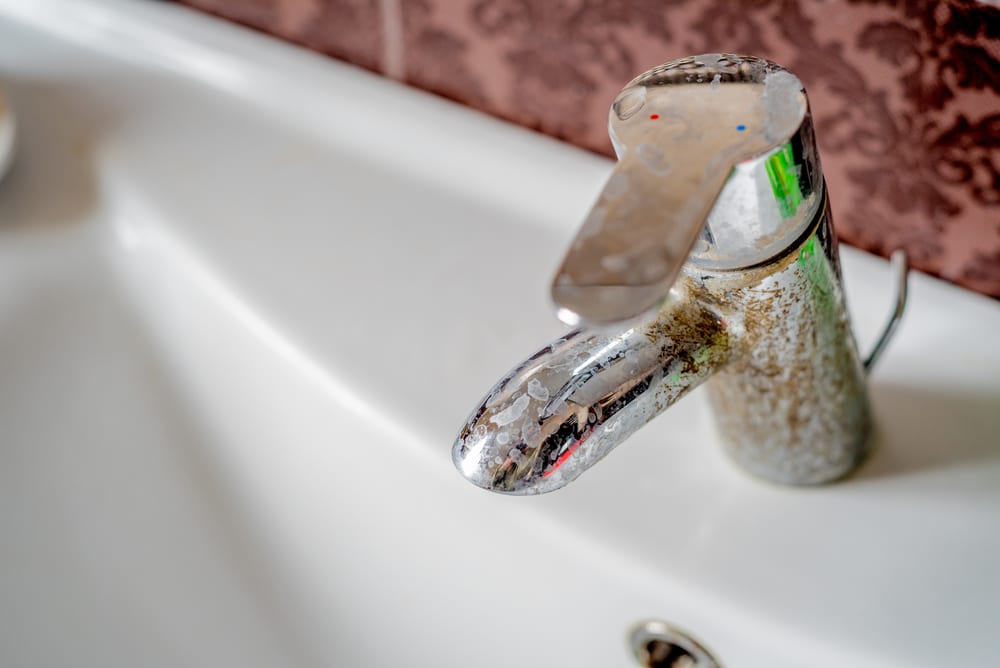
This is usually the first thing I notice when I step into a bathroom. That crusty residue around fixtures isn’t dirt—it’s dried calcium and magnesium. I once removed a showerhead so clogged with scale that the spray pattern looked like it was coming through a pinhole. The homeowner had replaced it twice already, thinking it was defective.

2. Soap that won’t lather properly

If you find yourself using more shampoo, body wash, or dish soap than you used to, hard water may be to blame. In my experience, people often think brands have changed formulas. In reality, minerals bind with soap and reduce its effectiveness, forcing you to compensate without realizing why.

3. Stiff, scratchy laundry straight out of the dryer

Hard water leaves mineral residue in fabric fibers. I had a family tell me their towels felt like sandpaper even with fabric softener. After installing a softener, the towels softened within a few washes—no new detergent, no special cycles.

4. Cloudy glassware and spots that won’t rinse away

These spots don’t wipe off because they’re not surface dirt. They’re mineral deposits baked onto the glass over time. I’ve seen homeowners replace entire dish sets, assuming the dishwasher was ruining them, when the machine was just the messenger.

5. Dry skin and dull hair after showering

Hard water strips natural oils less efficiently than soft water, leaving residue behind instead. I’ve heard this complaint countless times, especially from people who’ve recently moved. They blame the climate or aging, not realizing the water itself changed.

6. Frequent appliance repairs

Water heaters, washing machines, coffee makers—all of them suffer under hard water. A landlord I worked with was replacing water heater elements every couple of years. Once the hardness was addressed, those failures stopped. The savings showed up quietly over time, not as a dramatic fix.

7. Reduced water pressure over time

Scale builds up inside pipes just like it does on fixtures. You don’t lose pressure overnight—it slowly narrows the pipe diameter. I’ve cut into pipes that looked like arteries clogged with plaque. From the outside, everything seemed fine.

8. Longer heating times for hot water

Mineral scale acts as insulation inside water heaters. I’ve measured tanks where the element was buried under buildup, forcing the heater to work harder and longer. Homeowners notice rising energy bills before they notice the cause.

9. A film left behind on sinks and tubs after cleaning

If you clean regularly but surfaces still look hazy, that’s another mineral signature. I’ve had people apologize for their “dirty” bathrooms when the issue was actually water chemistry, not housekeeping.

10. Shortened lifespan of plumbing fixtures

Faucet cartridges, valves, and seals wear out faster in hard water. I’ve replaced parts in relatively new homes that should have lasted twice as long. Hard water doesn’t break things dramatically—it grinds them down.

Hard water doesn’t usually cause a sudden failure that sends water pouring across the floor. It’s subtler than that, and that’s what makes it expensive. The longer it goes unnoticed, the more quietly it shortens the life of everything it touches. When homeowners recognize these signs early, they avoid the cycle of repeated repairs and replacements—and their plumbing stops aging faster than the house itself.

The Small Gutter Problems That Turn Into Big Repairs Around Murfreesboro

After more than a decade working as an exterior repair contractor, I’ve learned that gutter repair murfreesboro tn is one of the most misunderstood services homeowners deal with. Most people call me because they see water spilling over the edge during a storm, but by the time that happens, the gutter has usually been failing quietly for months. In this part of Tennessee, heavy rain exposes weaknesses fast, especially in systems that were installed quickly or maintained irregularly.

One of the first gutter jobs that really stuck with me was on a house that looked pristine from the street. Clean siding, fresh landscaping, no visible sagging. The homeowner mentioned a musty smell inside after storms. Once I got on the ladder, I found a seam that had separated just enough to send water straight behind the gutter. It wasn’t dramatic—just a steady trickle—but it had been soaking the fascia and roof edge every time it rained. The repair itself was straightforward, but the wood damage behind it had already begun. That situation taught me how misleading “small” gutter issues can be.

Around Murfreesboro, hanger failure is something I see constantly. Many systems are installed with the minimum number of brackets, which might hold up for a few years. Add wet leaves, pine needles, and repeated downpours, and those gutters start to pull away from the house. I worked on a property last fall where the homeowner thought their gutter had bent. In reality, the hangers had loosened one by one, changing the slope and causing water to back up. Resetting the pitch and reinforcing the attachment solved the overflow immediately.

Another issue that doesn’t get enough attention is pitch. Gutters are supposed to move water, not store it. I’ve seen plenty of runs installed dead level, which leads to standing water and eventual corrosion. On one older home, the owner complained about insects gathering near the roofline. The culprit wasn’t pests—it was stagnant water sitting in a low spot of the gutter. A minor adjustment to the slope fixed a problem they’d been fighting for years.

I’m cautious about recommending quick DIY fixes, especially heavy use of caulk. Sealant has its place, but it doesn’t correct structural problems. I’ve been called out to fix repairs where screws were driven straight through thin aluminum without backing, cracking the metal just enough to leak later. Those repairs often hold long enough to give a false sense of security, then fail during the next major storm.

That said, I don’t push full replacements unless they’re justified. If the gutter material is still solid and the issues are limited to seams, corners, or attachment points, repairs make sense. I’ve extended the life of many systems by years with proper reinforcement and sealing. But I’ve also told homeowners honestly when their gutters were past that point. Chasing leaks on a system that’s warped or improperly installed from the start usually costs more in the long run.

One mistake I see over and over is waiting because the problem seems minor. A drip here, a splash there. Over time, that water erodes soil, stains brick, and softens wood. I worked on a home where a small corner leak had washed out enough dirt to expose part of the foundation edge. The gutter fix was simple, but the cleanup and grading afterward were not.

After years in this field, I’ve come to respect how much work gutters actually do. When they’re repaired correctly—proper pitch, solid hangers, sealed seams—they disappear into the background and protect everything beneath them. In Murfreesboro, where storms don’t give much warning, that quiet reliability matters more than most people realize.


Art Mobile, Seen From the Inside of a Van Full of Paint

I’ve been running an Art mobile program for more than ten years now—long enough that my livelihood has depended on whether a van full of canvases, easels, and half-dried paint could reliably turn a parking lot, school gym, or backyard into a working studio. I didn’t start out thinking I’d end up here. I was teaching community art classes, hauling supplies back and forth, and slowly realized that the biggest barrier for people wasn’t interest. It was logistics. So I put the studio on wheels and learned the hard way what actually makes mobile art work.

mobile art

The first real test came at an elementary school fundraiser. I arrived early, confident, and immediately discovered that the parking lot sloped just enough for water cups to tip over if I wasn’t careful. That day taught me something no brochure ever mentions: mobile art isn’t about being creative on the move—it’s about solving small, unglamorous problems quickly so the creativity can happen at all. Since then, I’ve adjusted how I pack, how I set up, and even how I choose projects based on where the studio is going.

One thing I’ve found over and over is that people underestimate how different mobile art feels from a fixed studio. When I visit a retirement community, the pace is slower, conversations linger, and projects need to be forgiving if someone steps away for a while. At a corporate team event, it’s the opposite. I remember a group last spring where half the participants were clearly skeptical at first. By the end, they were comparing abstract pieces and asking real questions about materials. Mobility changes the dynamic—people relax when art comes to them instead of feeling like they have to “belong” in an art space.

I’ll be honest: not all art translates well to a mobile format. I’ve learned to advise against anything that requires long drying times, heavy ventilation, or fragile setups. Early on, I tried incorporating large-scale resin work into a pop-up event. Transporting half-cured pieces was a mistake I won’t repeat. Mobile art rewards projects that are tactile, adaptable, and resilient. If a table wobbles or a breeze kicks up, the work should survive it.

One common mistake I see from newer Art mobile operators is overselling variety. They promise ten different mediums in a single session, then struggle to manage transitions. In my experience, fewer options done well beat a sprawling menu every time. Participants can sense when an instructor is stretched thin. I’d rather run one solid acrylic workshop smoothly than juggle watercolor, charcoal, and collage with compromised results.

What keeps me committed to mobile art isn’t convenience—it’s access. I’ve worked with kids who had never held a proper brush before because getting to a studio wasn’t realistic for their families. I’ve watched adults who insisted they “weren’t creative” quietly take their paintings home with pride. Those moments don’t happen despite the mobile format; they happen because of it.

After a decade in this work, my perspective is simple: Art mobile succeeds when the logistics disappear into the background. If participants remember the art, the conversation, and the feeling of making something with their hands—and forget the van, the setup, and the constraints—you’ve done it right.

What Sets Melbourne’s Best Paint Protection Film Installers Apart

I’ve been installing and correcting paint protection film for well over a decade, and Melbourne is one of those cities that doesn’t forgive sloppy work. Between unpredictable weather, heavy traffic, road debris, and long commutes, poor installs reveal themselves fast. That’s why conversations about Melbourne’s best paint protection film installers tend to circle back to the same thing: consistency. Not marketing, not brand names, but results that still look right months later.

PPF Car Paint Protection Film in Melbourne | Liquid.R PPF Wrap

Early in my career, I worked on a car that had film installed by a shop that rushed the job. From a distance, it looked fine. Up close, the edges were lifting, dirt was already trapped underneath, and the stretch marks were obvious on curved panels. Removing and reinstalling that film took far longer than doing it correctly the first time. Experiences like that shape how I judge installers today.

Experience Shows in the Edges

Anyone can lay film on a flat panel. Where experience shows up is in the details—wrapped edges, clean corners, and how installers handle complex curves. I’ve seen Melbourne installers who take the extra time to disassemble panels rather than cutting film short just to save time. That decision alone often separates average work from excellent work.

A client once brought me a performance sedan that had already been partially wrapped elsewhere. The bonnet looked decent, but the bumper told a different story. Excess tension had been used to force the film into place, and within weeks it began to lift. Reworking it meant removing the film entirely and starting fresh. The second time around, proper relief cuts and controlled stretching made all the difference.

Film Is Only as Good as the Prep

One mistake I see repeatedly is skipping proper paint correction before film installation. Even minor defects become permanent once film is applied. Melbourne’s better installers understand that prep isn’t optional—it’s foundational.

I remember correcting a dark-colored SUV that had light swirl marks from years of automatic washes. The owner wasn’t initially concerned, but once I explained that those marks would remain visible under the film, he agreed to correction first. The final result wasn’t just protected paint—it was paint that looked better than it had in years.

Honest Recommendations Matter

Not every car needs full coverage, and not every driver benefits from the same approach. Some of the best installers I’ve worked alongside in Melbourne are comfortable advising against unnecessary work. That might mean recommending high-impact areas only instead of full wraps, or suggesting alternatives when film doesn’t suit how a vehicle is used.

I once watched an installer talk a client out of wrapping an older daily driver that spent most of its time parked outdoors. Instead, they focused on targeted protection and realistic expectations. That kind of honesty builds trust and usually brings customers back later with newer vehicles.

Common Issues I’m Asked to Fix

Lifting edges, contamination under the film, and visible seams are the most frequent problems I correct. These issues rarely show up immediately. They appear weeks or months later, once the adhesive settles and the car has been driven normally.

Another issue is poor alignment around badges and sensors. Modern vehicles leave little room for error, and installers who don’t stay current with newer models often struggle. Melbourne’s best paint protection film installers keep learning because vehicles don’t stand still—and neither should technique.

Longevity Is the Real Measure

A customer last winter brought his car back after a long stretch of highway driving. The film had taken its share of impacts, but the paint underneath was untouched. No yellowing, no edge failure, no visible wear patterns. That’s what good installation looks like over time—not perfection on day one, but reliability long after.

After years in this trade, I’ve learned that quality film installation is quiet. It doesn’t draw attention to itself. It simply does its job, mile after mile. In a city like Melbourne, where conditions test every shortcut, the best installers stand out by how little you notice their work—because everything still looks exactly the way it should.